Jul 2, 2023
A simple app for drawing Wardley Maps
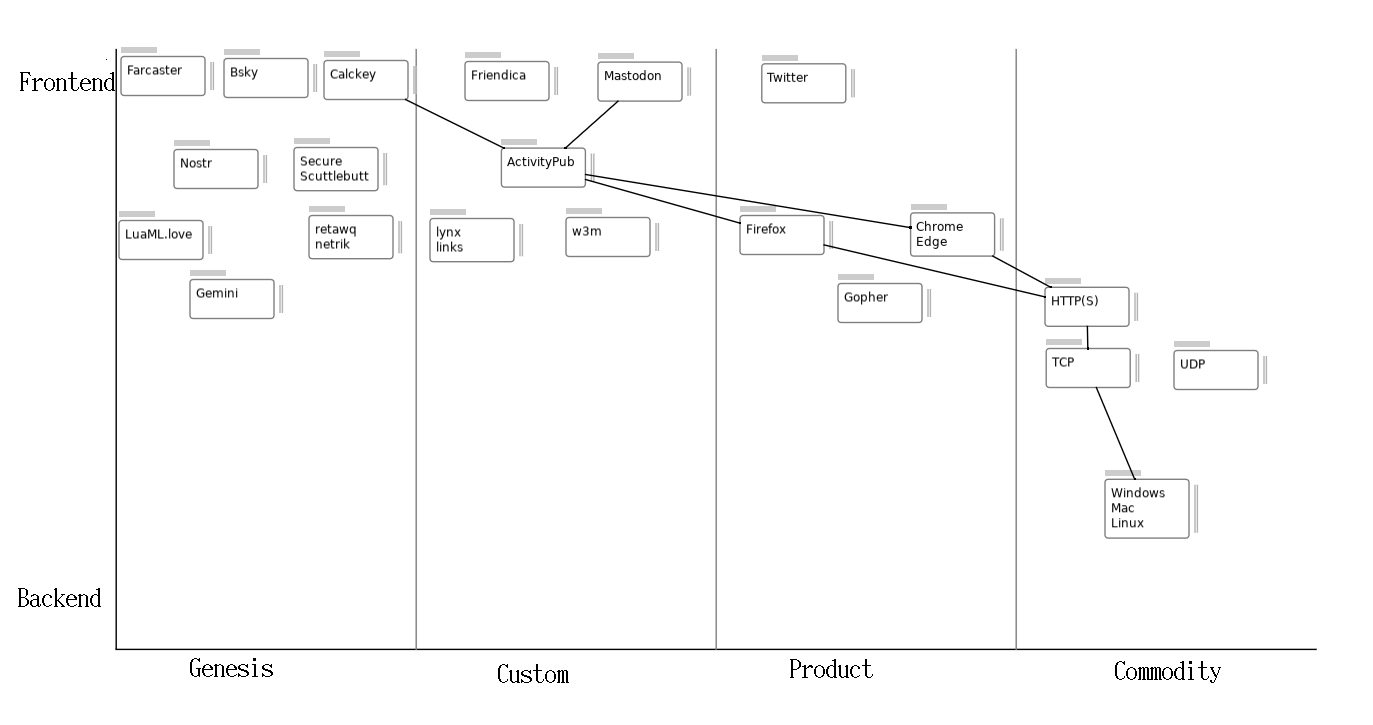
wardley.love is a reskin of snap.love for drawing Wardley Maps. I've been using it a lot; here's one example:
* *
wardley.love is a reskin of snap.love for drawing Wardley Maps. I've been using it a lot; here's one example:
I love reading Kragen Sitaker as an endless fount of surprisingly deep programs and analysis. Lately he's been avoiding the web and writing in a directory of markdown files. He writes so much that he switches directories every year or so (I think of them as volumes), and they're all highly recommended for sifting through during quiet afternoons:
pothi.love
is a simple browser for such a directory of files that lets me add comments
locally to them. Then I can git commit and git push
to publish them.
(The name: 'pothi' is Sanskrit for a sort of loose-leaf book of palm leaves, 'bound' with a single string through a single hole in the middle of each page/leaf.)
I've wanted something like this for a long time, a little app for drawing graphs. Intended for small graphs where laying things out by hand is not too painful, and it's nice that things don't move around every time I make a change, as happens with graphviz. The file format is still amenable to git like graphviz; no long lines, and adding new nodes or edges doesn't reorder unrelated nodes and edges.
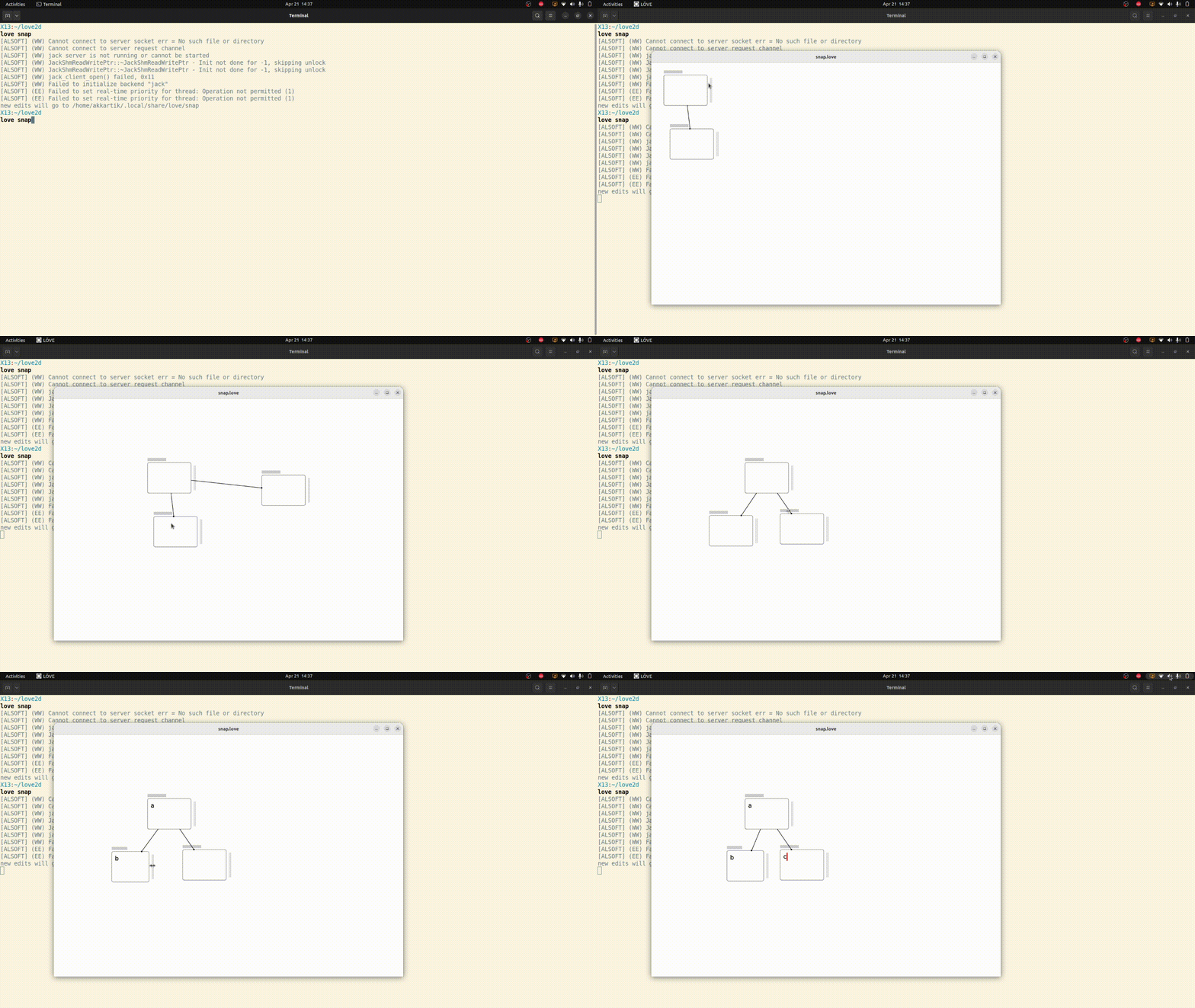
The catch: it's a lot more limited than all these tools; all you can do so far is draw rectangles and edges between them.
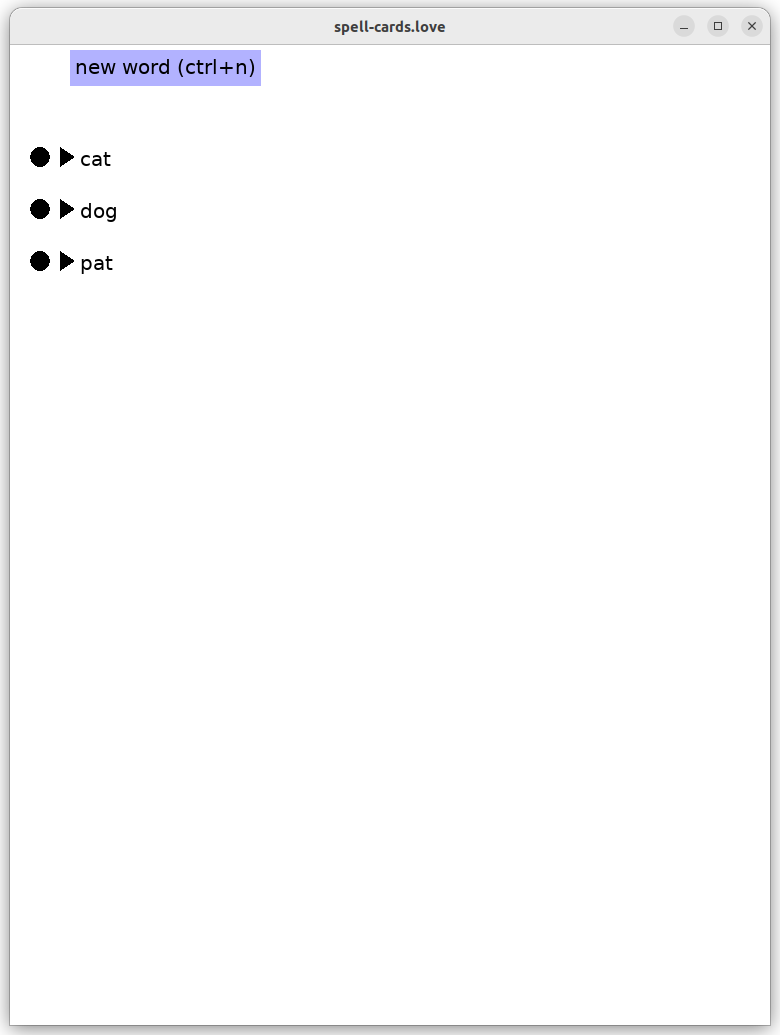
An incomplete flashcard app for testing spelling. We thought the kids might need it but quickly invalidated that hypothesis. Still useful as a simple Freewheeling App that shows off LÖVE's audio recording and playback capabilities.
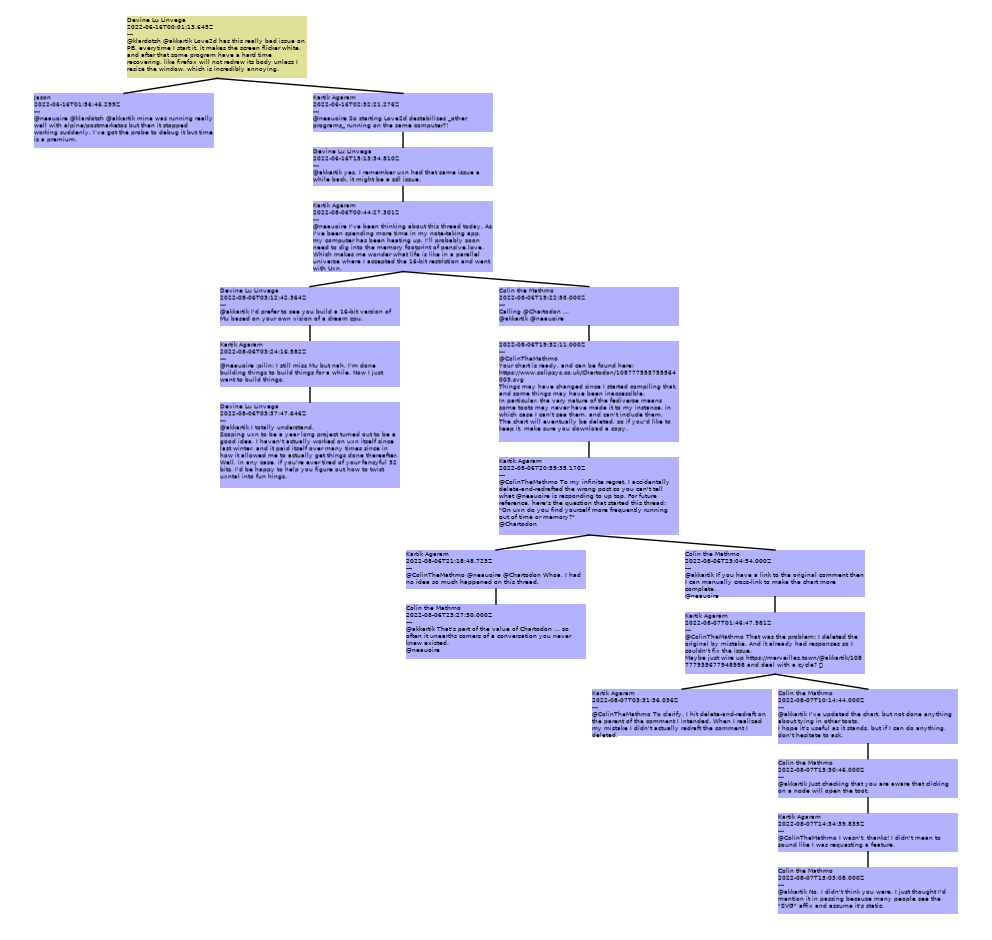
A graphical thread visualizer for Mastodon with panning, zooming and keyboard shortcuts for structured parent/child/sibling navigation. Click on a message to copy its link to the clipboard so you can paste it into the browser.
A toy interpreter for Brainf**k after reading this post by Laurie Tratt.
Over the course of 2022, I've found myself gradually programming in a certain way that has been working really well. Here, let me show you a few examples, see if you can spot the pattern:
Minimal dependencies, easy to build, runs anywhere you can install apps without asking permission, thoroughly tested, designed above all to reward curiosity about its internals.
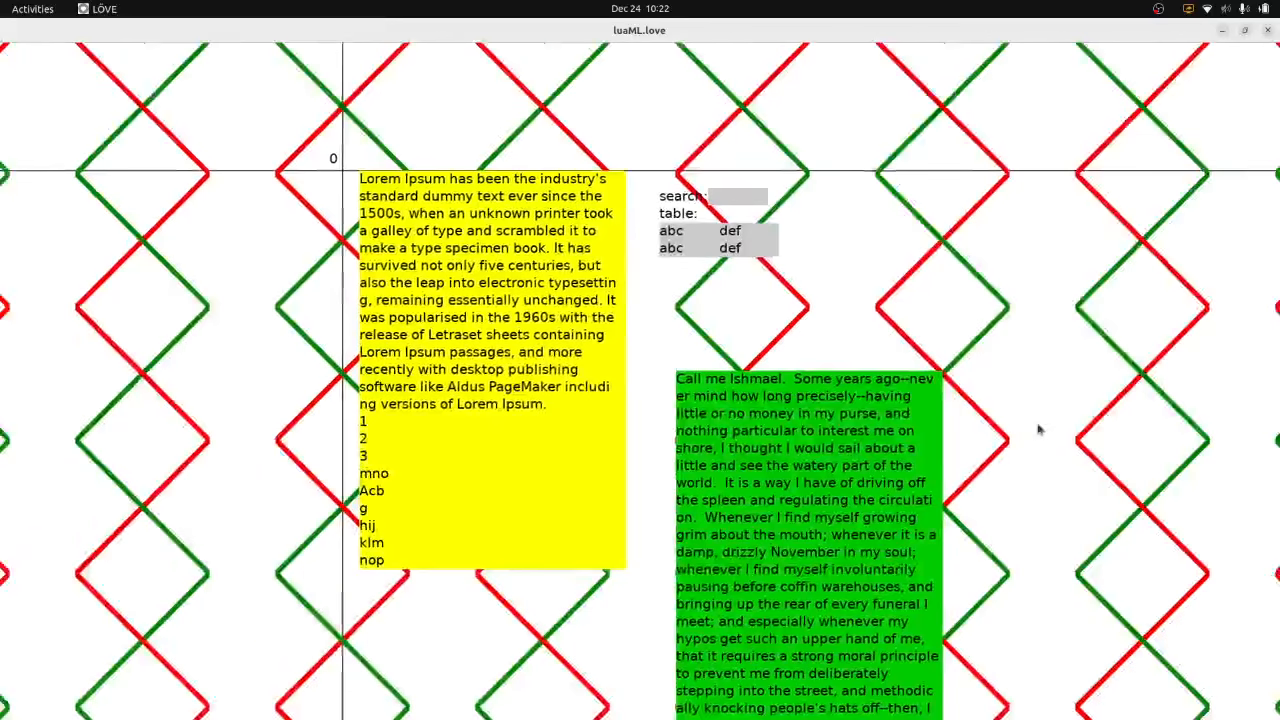
LuaML is a simple hierarchical box model for drawing shapes and text within rows and columns. Unlike HTML it has no syntax of its own; pages are just Lua literals. The core renderer generating shapes to draw is 50 lines of code.